By Ghassan Kanafani
“It was war-time. Not war really, but hostilities, to be precise… a continued struggle with the enemy.
In war, the winds of peace gather the combatants to repose, truce, tranquility, the holiday of retreat.
But this is not so with hostilities that are never more than a gunshot away, where you are always walking miraculously between the shots.”
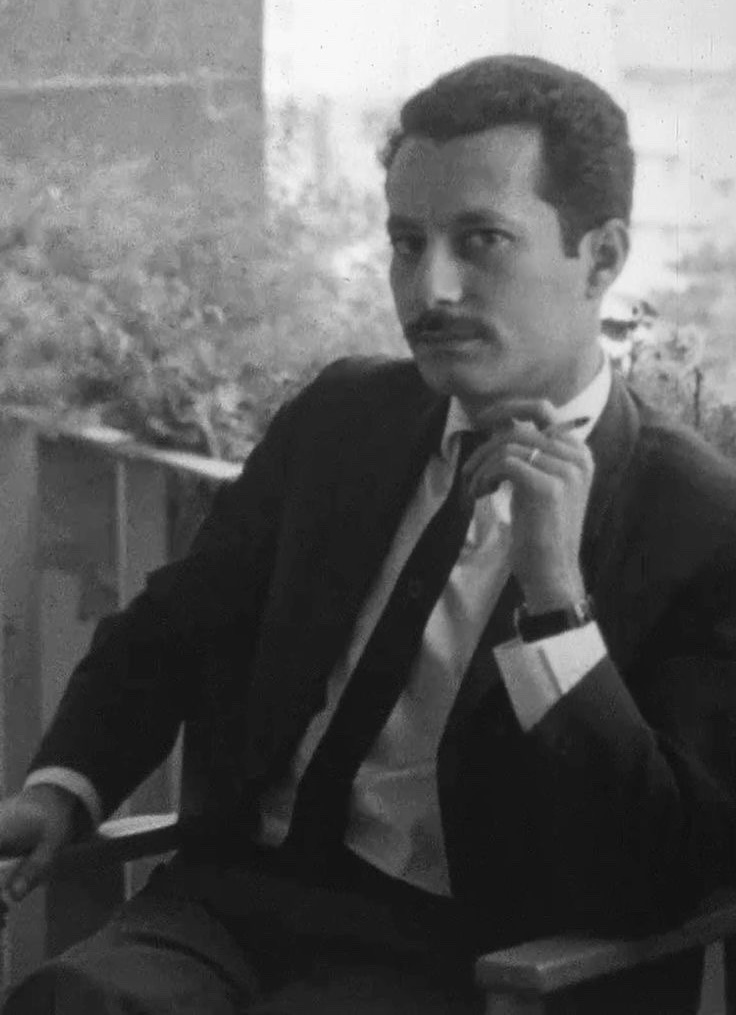
This is a collection of short stories by the Palestinian author, journalist, and resistance fighter Ghassān Kanafāni, with an introductory biographical essay.
Kanafani was born in Palestine in 1936. He became a refugee on his twelfth birthday because of the massacre in Deir Yassin. His political consciousness came from growing up in refugee camps and studying Arabic literature. As a young man he took a job as a schoolteacher in a UN refugee camp. He later became an editor of a political magazine in Beirut. In 1961 he married a Danish teacher, Anni Hoover. After 1965 he reported closely on the PLO and the armed resistance. In 1969, Kanafani founded the newspaper al-Hadaf (“the goal”) for the PFLP, a Marxist pan-Arabist group that sought to establish a secular socialist state in Palestine.
In 1972, at the age of 36, Kanafani and his niece Lamees were martyred by Mossad in a car bombing.
The stories in this collection deal a lot with tensions in the Palestinian community and in the Palestinian psyche.
The tension between older and younger generations, between those who desired safety for their family and those who desired freedom for their nation, those who sought fortune in business and those who sought glory in struggle, hot headed youngsters and gruff old men and stoic mothers.
The tensions between nostalgia and regret, desperation and courage. It’s a truly beautiful and complex insight that I’ve never gotten anywhere else.
One really striking thing about these short stories is the constant shifting of perspective and time. Many of them bounce back and forth between decades or between different family members. I find that is brings all the characters and places to life.
In jumping around so much in time, Kanafani shows the Palestinians’ changing attitude toward their condition of occupation and exile. At first they thought their banishment would be temporary. Eventually they came to accept their lot as a kind of shameful defeat. Then finally their national liberation struggle was renewed.
Kanafani’s prose is gripping and quick-paced, enjoyable even in translation. His imagery is sparing but effective and evocative and his emotions are piercing. Passages turn on a dime from peace to sudden brutality and back again. The deep blue sky, the scent of fresh tobacco, the pale spot left by a photograph on a wall, and the sweet taste of jam and butter are jumbled up with explosions, bloodstains, the dread of anticipation and the calm of certainty, and the bare legs of a settler woman who shoots dead a dozen men at once.
Many of the stories revolve around Mansur, a boy who takes up arms against the invaders in 1948. He travels all around Palestine visiting this and that town and this and that landmark. Reading his saga made me feel like I knew Palestine too. The places weren’t just names in a news headline but the homes of people I know. The true Palestinian history shining through the decades of destruction and Hebraization.
It’s really not about dry politics, facts and figures and stats. It’s physical, it’s emotional. It’s borrowing an old rifle from your uncle, trudging for miles under the punishing sun, getting thrust into a conflict and getting in way over your head, and coming back home to face the wrath of your own father.
The last story, “Returning to Haifa”, takes place in both 1948 and 1967. I won’t go into it too much because I don’t want to spoil the twist, but it’s about a husband and wife who were forced to flee the massacre of Haifa that was carried out by the Haganah (precursor to the IDF) in coordination with the British, leaving behind their infant son.
Twenty years later, the “Israeli” forces open the borders and allow Palestinians to enter their stolen hometowns. What the husband and wife find in their old house will shock you…
“I think the greatest influence on my writing goes back to reality
itself, what I witnessed, the experiences of my friends and
family and brothers and students, my life in the camps with
poverty and misery.”
I highly recommend this book to anyone who wants to learn more about what it’s like to live as a Palestinian. There are a lot of short stories but they’re very short and snappy. Absolutely well worth a read. Go check it out!
 El choque de olas
Leave a comment